




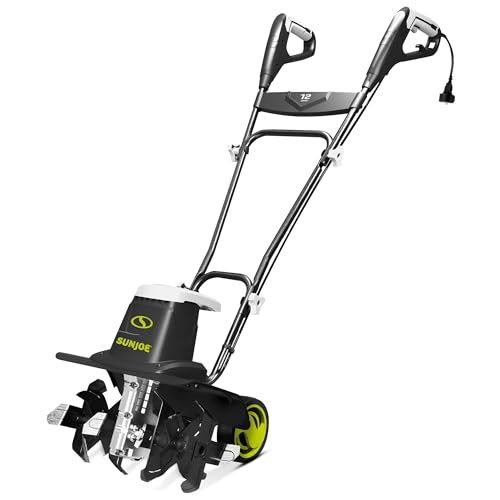
Sun Joe TJ604E 16-Inch 13.5-Amp Electric Tiller and Cultivator
Our TJ604E electric tiller and cultivator brings professional-grade performance to home gardeners who need serious soil prep without the noise, fumes, or hassle of gas engines. Powered by a robust 13.5-amp motor, this machine churns through compacted soil, clay, and hardpan with six angled steel tines that rotate at high speed to break up clods and mix in compost or amendments.
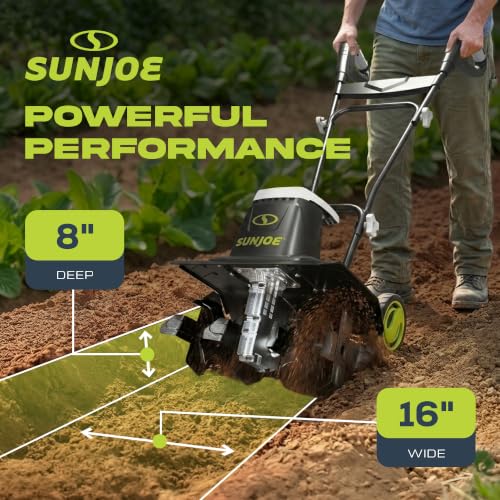
The 16-inch tilling width lets you cover raised beds, vegetable rows, and flower borders in fewer passes, while the adjustable tilling depth reaches up to 8 inches so you can tailor cultivation to new plantings or deep soil turnover. We designed the TJ604E for gardeners who value simplicity: just plug in, press the safety button, and squeeze the trigger. No oil changes, no carburetor cleaning, no pull cords. Folding handles and a compact 29-pound build make storage and transport effortless, and the rear drag stake steadies your line when working fresh ground.
TJ604E specifications at a glance
Motor Power and Tilling Performance
The sun joe tj604e runs on a 13.5-amp motor that spins six heat-treated steel tines at aggressive angles, slicing through clay, rocky soil, and root-matted beds that would stall smaller machines. We chose this amperage because it delivers the torque needed for deep cultivation without requiring a 220-volt outlet—standard household 120V current is all you need.
Tilling width adjusts from narrow passes for tight rows to the full 16-inch span for open beds, and depth control ranges from shallow surface cultivation (perfect for mixing compost into the top 3 inches) down to 8 inches for new garden prep. The tines counter-rotate to pull the machine forward, reducing user fatigue and keeping your line straight even in uneven ground.
Design and Maneuverability
We built the TJ604E around a lightweight steel frame and ergonomic handle grip that folds flat for vertical storage in sheds or garages where floor space is tight. At 29 pounds, the unit is light enough to carry to remote beds or lift into a truck bed, yet the rear drag stake provides the ballast you need to prevent the tiller from bouncing or skipping across hard soil.
Wheel-Free Design
Unlike wheeled cultivators that ride over the surface, the TJ604E’s tines dig in and self-propel, so you control depth by applying downward or upward pressure on the handles. This wheel-free design excels in established gardens where you need to work around existing plants without compacting paths. The depth of cut offered by units like the TJ603E shares a similar self-propelled tine system, though that model steps down to a 12-amp motor and narrower working width for tighter beds.
Electric Operation and Maintenance
Electric power means zero mixing fuel, zero carburetor adjustments, and zero winterization. Plug the TJ604E into any grounded 120V outlet, press the safety lock button, and squeeze the trigger—tines spin instantly. When you’re done, simply release the trigger, unplug, and wipe down the tines.
We recommend using a 12-gauge or heavier outdoor extension cord rated for at least 15 amps to prevent voltage drop on long runs. Keep the cord behind you as you work forward, and avoid tilling over the cable. Store the unit indoors or under a tarp to protect the motor housing from prolonged moisture exposure, though the sealed design resists rain and garden spray during use.
Compare Sun Joe Electric Tiller Models


Rated 4.8 by verified buyers

Common Questions About the TJ604E Electric Tiller
Use a 12-gauge outdoor extension cord rated for at least 15 amps. For runs up to 50 feet, 12-gauge is sufficient; for 100 feet or longer, consider 10-gauge to prevent voltage drop. Always plug the tiller directly into the cord and the cord into a GFCI-protected outlet. Never use indoor-rated cords or daisy-chain multiple cords together.
Yes, the sun joe tj604e will chop through sod and grass roots with multiple passes. Start at the shallowest depth setting to slice the root mat, then increase depth incrementally on subsequent passes. Work in perpendicular directions to fully pulverize clumps. For thick Kentucky bluegrass or Bermuda sod, plan on three to four overlapping runs and allow extra time for the tines to chew through the dense root system.
Tilling depth adjusts from surface cultivation (approximately 2 inches) down to a maximum of 8 inches. Depth is controlled by applying downward or upward pressure on the handles and by adjusting the rear drag-stake position. For new garden prep, set the stake to allow full 8-inch penetration; for mixing compost into established beds, raise the stake to limit depth to 3–4 inches.
The six steel tines and 13.5-amp motor handle clay and moderate rock content well, though large stones (greater than 3 inches) should be removed by hand to prevent tine damage. Clay soil tills best when slightly moist—not saturated or bone-dry. If you hit a rock, release the trigger immediately, remove the obstruction, and resume. Inspect tines after each use in rocky ground and sharpen or replace as needed.
After each use, unplug the tiller and brush soil off the tines and motor housing. Check the tines for nicks or dull edges; sharpen with a metal file or bench grinder if cutting performance declines. Store the unit indoors or under a waterproof cover to protect electrical components. No oil changes, spark plugs, or air filters are required. Inspect the power cord and plug for damage before every session, and replace if you see exposed wire or cracked insulation.
The TJ604E features a 13.5-amp motor and 16-inch tilling width, while the TJ603E runs a 12-amp motor and tills 12 inches wide. Both reach 8 inches deep and share similar folding-handle designs, but the TJ604E covers more ground per pass and delivers higher torque for compacted soil. Choose the TJ603E if your beds are narrower than 12 inches or if you need a lighter unit for frequent repositioning.
The TJ604E is splash-resistant and can operate in light rain or damp soil, but avoid tilling saturated or muddy ground. Wet clay will clog the tines and form heavy clods that dry into bricks. Wait until soil is moist but crumbly—squeeze a handful and it should hold shape briefly, then break apart when poked. Tilling in ideal moisture conditions improves soil structure and reduces motor strain.